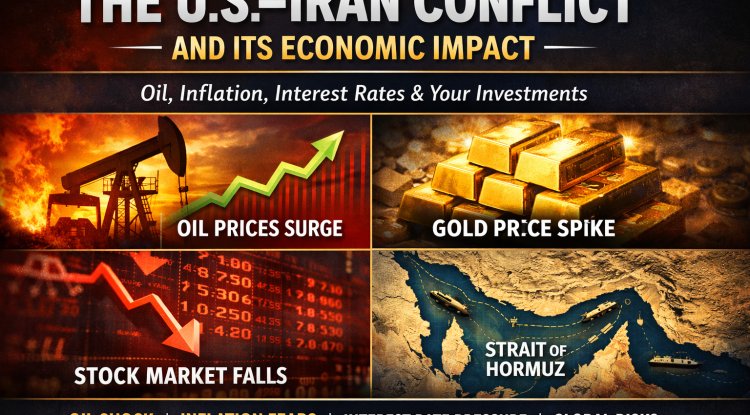
The U.S.–Iran Conflict and Its Economic Impact: What It Means for Oil, Inflation, Interest Rates, and Your Investments
A comprehensive analysis of how a U.S.–Iran conflict impacts oil prices, inflation, interest rates, the stock market, the U.S. dollar, and long-term investment portfolios. Understand the economic chain reaction and what it means for investors globally.
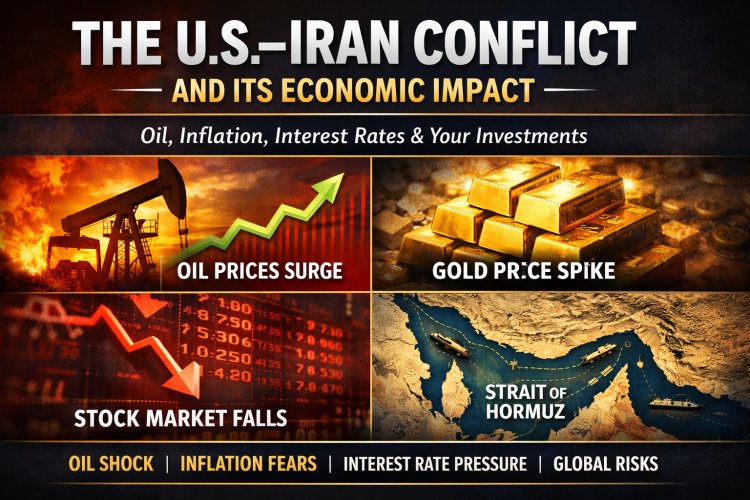
When geopolitical tensions escalate between the United States and Iran, headlines tend to focus on politics, military strategy, and diplomacy. However, beyond the political debate lies a deeper and often more immediate consequence: financial markets react rapidly and systematically. Capital does not wait for clarity. It responds to risk.
This article provides a comprehensive breakdown of how a U.S.–Iran conflict can affect oil prices, inflation, interest rates, the stock market, the U.S. dollar, global capital flows, and long-term retirement portfolios. It also examines how these developments ripple across emerging markets, including African economies.
The goal is not to speculate on political outcomes, but to understand the economic mechanisms that activate during geopolitical instability.
1. Why Geopolitical Conflict Moves Financial Markets Immediately
Financial markets operate on expectations. Prices reflect anticipated future conditions, not present realities alone. When news breaks that the United States has engaged in military action involving Iran, investors immediately assess several key risks:
-
Will oil supply be disrupted?
-
Will global trade routes be affected?
-
Will inflation increase?
-
Will central banks adjust monetary policy?
-
Will investor confidence decline?
Because markets are forward-looking, asset prices adjust within minutes.
Three asset classes typically move first:
-
Oil
-
Gold
-
Equities (stocks)
Understanding these reactions provides insight into broader economic consequences.
2. Oil: The Central Variable
Oil is often the most sensitive asset during Middle Eastern conflict. Iran sits in a region that is central to global energy supply. One of the most critical geographical chokepoints in the global energy system is the Strait of Hormuz, through which a significant percentage of the world's oil shipments pass.
If markets perceive a threat to oil transport or production, prices can rise sharply even before any physical disruption occurs.
Why Oil Prices Rise So Quickly
Oil markets react to:
-
Supply disruptions
-
Shipping route instability
-
Sanctions
-
Insurance risk premiums on cargo shipments
-
Speculative positioning
Even a perceived threat to supply can push prices higher.
How Higher Oil Prices Affect the Economy
Oil is not just gasoline. It is embedded in:
-
Transportation
-
Agriculture
-
Manufacturing
-
Plastics
-
Chemicals
-
Aviation
-
Shipping
When oil prices rise:
-
Fuel costs increase.
-
Transportation costs increase.
-
Production costs increase.
-
Consumer prices increase.
This is where inflation becomes a concern.
3. Inflation: The Secondary Shock
Inflation measures the general rise in prices across an economy. When oil prices spike, it often leads to what economists call cost-push inflation.
Businesses facing higher energy costs pass those costs onto consumers.
If inflation was already elevated before the conflict, higher oil prices can intensify the problem.
Why Inflation Matters So Much
Inflation affects:
-
Purchasing power
-
Wage negotiations
-
Consumer confidence
-
Interest rates
-
Asset valuations
Inflation is particularly sensitive because central banks attempt to control it through monetary policy.
4. The Role of the Federal Reserve
The Federal Reserve, the central bank of the United States, manages monetary policy primarily through interest rates.
Its key objectives:
-
Price stability
-
Maximum employment
-
Financial system stability
If inflation rises due to oil shocks, the Federal Reserve may:
-
Delay interest rate cuts
-
Maintain higher rates longer
-
Signal tighter policy
Higher interest rates impact:
-
Mortgage rates
-
Business loans
-
Credit cards
-
Car loans
-
Stock valuations
5. Interest Rates and Asset Prices
Interest rates act as the cost of money.
When rates rise:
-
Borrowing becomes more expensive.
-
Consumers spend less.
-
Businesses invest less.
-
Asset prices face pressure.
Stocks are particularly sensitive to interest rates because future earnings are discounted at prevailing rates. Higher rates reduce the present value of future cash flows.
This is why stock markets often decline during inflation spikes.
6. Gold as a Safe Haven
Gold historically performs well during:
-
Geopolitical uncertainty
-
Inflationary periods
-
Currency instability
Investors buy gold for capital preservation rather than growth.
When conflict erupts:
-
Institutional investors hedge risk.
-
Portfolio managers reduce exposure to equities.
-
Gold demand increases.
This demand drives prices higher.
7. Sector Rotation in the Stock Market
Not all stocks react the same way.
During geopolitical conflict:
Energy companies may benefit from higher oil prices.
Defense contractors may rise due to increased military spending.
Airlines often decline because:
-
Fuel costs increase.
-
Flight routes may be restricted.
-
Consumer travel declines.
Consumer discretionary companies may weaken if inflation pressures spending.
Understanding sector rotation is critical for investors.
8. The U.S. Dollar and Global Capital Flows
The U.S. dollar is the world’s reserve currency.
During times of global uncertainty:
-
Investors may seek safety in U.S. Treasury bonds.
-
The dollar may strengthen.
However, if concerns arise about U.S. fiscal stability, inflation, or prolonged military spending, investors may diversify away from U.S. assets.
Capital flows determine asset prices. When foreign investors reduce purchases of U.S. stocks and bonds, demand decreases, potentially limiting price growth.
9. Supply and Demand in Equity Markets
Stock prices are not determined solely by company earnings. They are determined by:
Supply (shares available for sale)
Demand (investors willing to buy)
If geopolitical risk reduces investor demand, stock prices can decline even if company fundamentals remain strong.
This is particularly relevant for retirement accounts such as 401(k)s, which are heavily invested in equities.
10. Retirement Accounts and Volatility
Many retirement portfolios are structured around:
-
Broad stock market index funds
-
Bond funds
-
Target-date funds
Geopolitical volatility increases short-term fluctuations.
However, long-term investors should distinguish between:
-
Structural economic damage
-
Temporary price volatility
Historically, markets recover from geopolitical shocks, though timing varies.
11. Oil, Inflation, and Emerging Markets
For countries that import oil, higher prices create additional strain.
In emerging markets:
-
Fuel imports increase trade deficits.
-
Local currencies may weaken.
-
Inflation may rise faster than in developed markets.
African economies that depend on fuel imports can experience:
-
Increased transportation costs
-
Rising food prices
-
Currency pressure
This can reduce consumer spending and economic growth.
12. Venezuela and Oil Supply Dynamics
If policymakers seek to offset Middle Eastern supply disruptions, they may attempt to increase production elsewhere.
However:
-
Oil infrastructure requires time to modernize.
-
Production capacity cannot expand instantly.
-
Geopolitical complexity remains.
Markets respond to current supply conditions, not future intentions.
13. Mortgage Rates and Housing Markets
Interest rate policy directly affects mortgage rates.
If inflation remains elevated:
-
Central banks may avoid cutting rates.
-
Mortgage rates stay higher.
-
Housing affordability declines.
If rates eventually fall:
-
Demand for homes increases.
-
Prices may rise.
This feedback loop illustrates how geopolitical conflict indirectly influences housing markets.
14. Consumer Debt and Household Impact
Higher rates affect:
-
Credit card balances
-
Auto loans
-
Personal loans
Households carrying variable-rate debt may feel financial strain.
Inflation combined with high interest rates reduces disposable income.
15. Corporate Profits and Cost Pressures
Companies face rising:
-
Energy costs
-
Shipping costs
-
Insurance premiums
Profit margins compress unless firms successfully pass costs onto consumers.
Investors monitor earnings reports for signs of margin pressure.
16. Long-Term Structural Implications
If geopolitical conflict becomes prolonged:
-
Defense spending increases
-
Government deficits may widen
-
Bond issuance may rise
Higher government borrowing can influence:
-
Treasury yields
-
Dollar stability
-
Global investment allocation
17. Risk Management for Investors
Prudent strategies include:
-
Diversification across asset classes
-
Exposure to international markets
-
Allocation to inflation-resistant assets
-
Maintaining emergency liquidity
-
Avoiding excessive leverage
Market timing based on headlines is rarely effective.
Strategic asset allocation matters more than short-term reactions.
18. Historical Context
Financial markets have experienced:
-
Oil embargoes
-
Wars
-
Terrorist attacks
-
Financial crises
While volatility can be severe, markets historically recover over time.
Investors who panic often lock in losses.
19. Behavioral Finance Considerations
During conflict:
-
Fear increases.
-
Media intensity rises.
-
Emotional decision-making escalates.
Behavioral biases include:
-
Loss aversion
-
Herd mentality
-
Recency bias
Disciplined investors follow structured plans rather than headlines.
20. Strategic Conclusion
The economic impact of a U.S.–Iran conflict extends far beyond political headlines.
It influences:
-
Oil markets
-
Inflation
-
Interest rates
-
Stock sectors
-
Currency flows
-
Housing markets
-
Retirement portfolios
-
Emerging economies
Understanding the chain reaction enables better financial decisions.
The sequence often unfolds as follows:
Conflict uncertainty
Oil price increases
Inflation pressure
Central bank constraints
Interest rate implications
Stock market volatility
Retirement portfolio fluctuations
The key is not prediction, but preparation.
Financial resilience depends on:
-
Knowledge
-
Diversification
-
Long-term discipline
-
Risk awareness
-
Strategic allocation
Geopolitical events are part of economic cycles. Investors who understand the interconnected systems are better positioned to navigate uncertainty without abandoning long-term objectives.
Economic literacy transforms fear into informed strategy.
What's Your Reaction?