How the Stock Market Works: The Ultimate Beginner’s Guide to Wealth Building
Master the essentials of the stock market. Learn how stocks are traded, the role of exchanges like the NYSE, and proven strategies for long-term investing success.

At its most fundamental level, the stock market is a vast network of exchanges where investors buy and sell ownership in public companies. When you buy a "stock" or a "share," you are literally purchasing a piece of that corporation.
If a company has 1,000,000 shares outstanding and you buy 10,000 of them, you own 1% of the company. As an owner, you are entitled to a portion of the company’s earnings and, in many cases, voting rights on how the company is managed.
Why Do Companies Sell Stock?
Businesses need capital to grow. Whether they are building new factories, researching a cure for a disease, or expanding into new international markets, growth requires money. A company can raise this money in two primary ways:
-
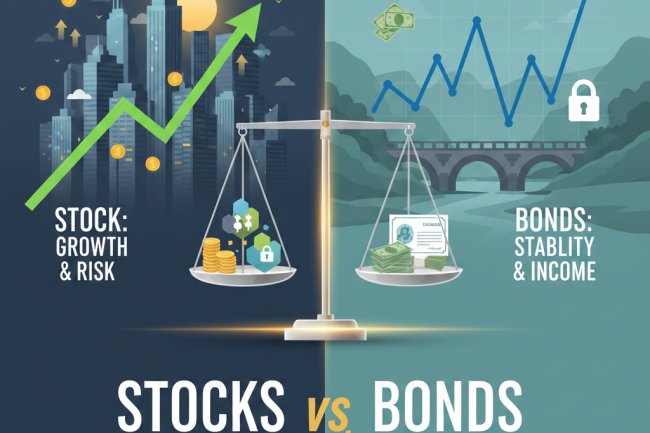
Debt: Taking out a loan or issuing bonds (which must be paid back with interest).
-
Equity: Selling pieces of the company to the public through an Initial Public Offering (IPO).
The stock market allows companies to access massive amounts of capital without the burden of monthly debt repayments. In exchange, the public gets to participate in the company's future success.
How the Market Operates: The Mechanics
The stock market functions similarly to an auction house.
-
The Exchange: This is the marketplace. Examples include the New York Stock Exchange (NYSE) or the NASDAQ. While these used to be physical floors filled with shouting traders, they are now almost entirely digital.
-
Buyers and Sellers: For every trade, there must be a buyer (the bid) and a seller (the ask).
-
The Broker: Most individuals cannot walk onto an exchange. You use a brokerage—an intermediary that executes the trade on your behalf via a mobile app or website.
Price Discovery: Why Do Prices Change?
The price of a stock is determined by supply and demand. If more people want to buy a stock (demand) than sell it (supply), the price goes up. If a company reports bad news and everyone wants to sell, the price drops.
However, the underlying driver of demand is earnings. Investors are essentially betting on the future profitability of a company. If the market believes a company will make more money in the future, the stock price usually rises today.
Key Concepts Every Investor Must Know
1. Market Indices
You often hear news anchors say, "The market was up today." They are usually referring to an index. An index tracks a specific group of stocks to represent the overall health of the economy.
-
S&P 500: Tracks 500 of the largest companies in the United States.
-
Dow Jones Industrial Average: Tracks 30 prominent companies.
-
Nasdaq Composite: Heavily weighted toward technology companies.
2. Bull vs. Bear Markets
-
Bull Market: A period when stock prices are rising or expected to rise. It is characterized by optimism and investor confidence.
-
Bear Market: A period when prices fall (usually 20% or more from recent highs), typically accompanied by widespread pessimism and economic downturns.
3. Dividends
Some companies share their profits directly with shareholders. These payments are called dividends. They are a way for investors to earn "passive income" without selling their shares.
Risk vs. Reward: The Golden Rule
In the world of finance, there is no such thing as a "guaranteed" high return. The stock market involves risk. You could lose your principal investment if a company goes bankrupt.
To manage this, professional investors use Diversification. This is the practice of spreading your money across many different stocks, industries, and countries. If one company fails, the others in your "portfolio" can keep you afloat.
The Power of Compound Interest
The most significant advantage of the stock market is time. Through the process of compounding, the returns you earn on your money eventually start earning their own returns.
If you invest $1,000 and it grows 10%, you have $1,100. The next year, that 10% growth applies to the full $1,100, not just your original thousand. Over 30 or 40 years, this effect creates exponential wealth.
How to Start Your Journey
-
Educate Yourself: Understand the difference between "trading" (short-term gambling) and "investing" (long-term ownership).
-
Choose a Brokerage: Select a platform with low fees and a user-friendly interface.
-
Start Small: You don't need thousands of dollars. Many platforms allow you to buy "fractional shares" for as little as $1.
-
Think Long Term: The market is volatile day-to-day, but historically, it has trended upward over decades.
Conclusion
The stock market is one of the greatest tools for wealth creation in human history. By understanding the mechanics of how companies grow and how value is exchanged, you can transition from being a consumer to being an owner.
What's Your Reaction?