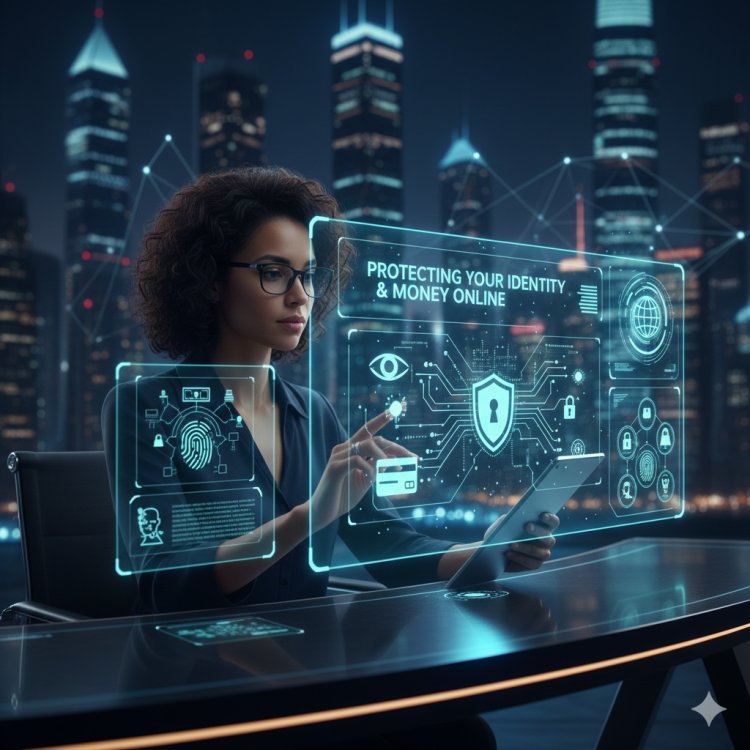
Protecting Your Identity & Money Online: The 2026 Essential Safety Manual
Master the latest techniques to secure your digital life. From AI-voice scam prevention to quantum-resistant security habits, this guide protects your global assets and identity.
The 2026 Threat Landscape: A New Reality
The digital world of 2026 is vastly different from that of just a few years ago. We have moved beyond simple "malware" into a realm where artificial intelligence can clone a loved one's voice, generate perfect phishing emails in any language, and create synthetic identities that baffle traditional credit checks.
For the modern global citizen, protecting money is no longer just about a strong password; it is about building a multi-layered fortress around your digital existence. This guide provides the blueprint for that fortress, accessible to all, regardless of professional background or technical expertise.
1. The Human Firewall: Recognizing Modern Social Engineering
Technology has become so secure that criminals now focus on "hacking the human." Social engineering is the art of manipulation, and in 2026, it has reached a peak of sophistication.
AI-Powered Voice and Video Scams
One of the most terrifying developments is the rise of deepfake technology. A scammer can now use a ten-second clip of your voice from social media to generate a phone call to your bank or your family.
-
The Family Safe Word: Establish a "safe word" or "challenge question" with your family and business partners that only you know. If an "emergency" call comes in asking for money, use the safe word to verify identity.
-
Trust Your Instincts: If a request for money feels urgent or creates an emotional panic, hang up. Call the person or institution back using a verified number from their official website.
Hyper-Personalized Phishing
Gone are the days of emails filled with typos. Today's "Smishing" (SMS phishing) and "Phishing" (email) use AI to study your professional profile and mimic the exact tone of your boss, your bank, or a government agency.
-
Zero-Click Awareness: Never click links in unsolicited messages. Always navigate to the official app or website manually.
2. Advanced Authentication: Moving Beyond the Password
The password is the weakest link in the security chain. In 2026, relying solely on a string of characters is a significant risk.
Multi-Factor Authentication (MFA) 2.0
Most services now require MFA, but not all MFA is created equal.
-
Move Away from SMS: Text message codes are vulnerable to "SIM swapping." Use authenticator apps (like Microsoft Authenticator) or, even better, physical hardware security keys (like YubiKey).
-
Biometric Integration: Utilize your device’s fingerprint or facial recognition features. Behavioral biometrics—which track how you hold your phone or the speed at which you type—are now being used by banks to ensure the person holding the device is actually you.
3. Financial Armor: Securing Transactions and Accounts
Protecting your money requires a proactive approach to how you spend and monitor your funds.
The Power of Virtual Cards
Static credit card numbers are liabilities. Many modern banking apps allow you to create "Virtual Cards" for online shopping. These cards can be set for a single use or a specific dollar amount. If the merchant’s database is hacked, your primary card remains safe and the virtual card becomes useless.
Real-Time Account Monitoring
Enable push notifications for every single transaction, no matter how small. Fraudsters often "test" an account with a $0.05 transaction before attempting a massive withdrawal. Catching the test charge can save your entire balance.
Credit Freezes
Unless you are actively applying for a loan or a new credit card, your credit profile should be "frozen" at the major bureaus (Equifax, Experian, TransUnion). This prevents anyone—including an identity thief—from opening a new line of credit in your name.
4. Digital Hygiene: Securing Your Infrastructure
Your security is only as strong as the devices you use to access your wealth.
-
Public Wi-Fi is a No-Go: Never check your bank balance or shop online using airport or café Wi-Fi without a high-quality VPN (Virtual Private Network).
-
Update Discipline: Manufacturers release "security patches" constantly to fix newly discovered backdoors. Set all your devices—including your "smart" home appliances—to update automatically.
-
The Remote Wipe: Ensure "Find My Device" features are active on all smartphones and laptops. If a device is lost or stolen, you must be able to erase the data remotely before a thief can bypass the lock screen.
5. Managing Your Digital Footprint
Identity theft often starts with "doxing"—the gathering of small pieces of information from across the web to build a profile.
-
Audit Your Social Media: Check your privacy settings. Does the public really need to know your birth year, your high school, or your pet's name? These are often the answers to security questions.
-
Data Broker Removal: Use services that scan and remove your personal data from "People Search" sites. These sites are the primary source of information for scammers looking to target you with personalized attacks.
Conclusion: Consistency is Key
Security in 2026 is not a one-time setup; it is a lifestyle. By implementing these layers—safe words, hardware keys, virtual cards, and digital hygiene—you transform yourself from an easy target into a formidable challenge for even the most advanced cybercriminals.
The most powerful tool you have is your own awareness. Stay curious, stay skeptical of unexpected urgency, and treat your digital identity with the same value as your physical home.
What's Your Reaction?