Introduction
Life does not come with a manual. Every individual, regardless of age, profession, culture, or background, must learn how to navigate challenges, relationships, responsibilities, and personal ambitions through experience. While circumstances vary across the world, the core lessons that shape a fulfilled and successful life remain remarkably universal.
Personal lessons are not abstract ideas reserved for philosophers or scholars. They are practical truths learned through success, failure, relationships, hardship, and self-reflection. These lessons influence how we make decisions, manage emotions, interact with others, and define success on our own terms.
In a rapidly changing world where external validation, pressure, and uncertainty are constant, understanding foundational personal lessons becomes even more important. They act as internal anchors, helping individuals maintain clarity, resilience, and purpose regardless of external conditions.
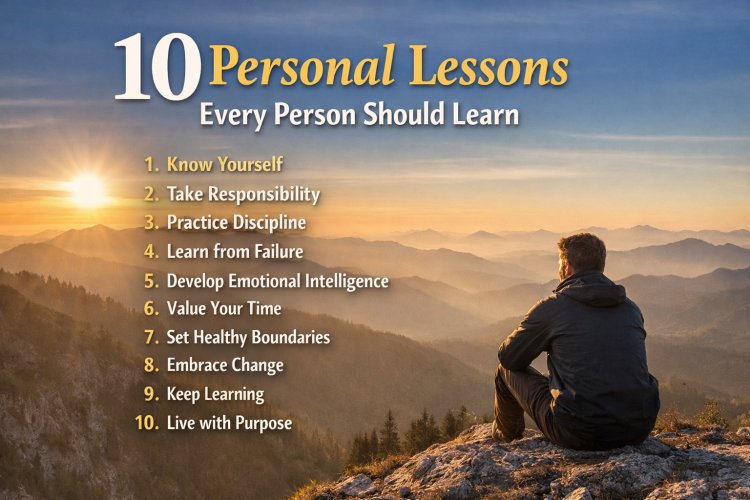
This article explores ten personal lessons every person should learn. These lessons apply across all ages, genders, professions, and cultures. Whether you are a student, a professional, an entrepreneur, a parent, or someone simply seeking personal growth, these insights offer long-term value for living a meaningful and successful life.
1. Self-Awareness Is the Foundation of Personal Growth
Self-awareness is the ability to understand your thoughts, emotions, behaviors, strengths, weaknesses, and motivations. Without it, personal growth becomes accidental rather than intentional.
Many people live on autopilot, reacting to life without understanding why they feel a certain way or make specific choices. Self-awareness allows individuals to pause, reflect, and respond thoughtfully rather than react impulsively.
When a person understands their emotional triggers, values, and limitations, they gain greater control over their actions. This awareness improves relationships, decision-making, leadership ability, and emotional intelligence.
Self-awareness also reduces self-deception. It encourages honesty with oneself, which is essential for long-term growth. Growth does not begin with perfection but with awareness of where improvement is needed.
Developing self-awareness requires reflection, openness to feedback, and a willingness to question one’s own assumptions. Over time, it becomes the foundation upon which all other personal lessons are built.
2. Responsibility for Your Life Cannot Be Delegated
One of the most powerful lessons in life is understanding that personal responsibility cannot be outsourced. While external factors influence circumstances, individuals remain responsible for their choices, responses, and growth.
Blaming circumstances, other people, or systems may provide temporary emotional relief, but it prevents real progress. Taking responsibility empowers individuals to take action, learn from mistakes, and adapt.
Personal responsibility does not mean ignoring injustice or hardship. It means acknowledging reality while still choosing proactive behavior within one’s control. This mindset builds resilience and self-respect.
When individuals accept responsibility for their actions and decisions, they become less reactive and more intentional. They shift from a victim mindset to a problem-solving mindset, which is essential for both personal and professional success.
Ultimately, responsibility fosters maturity, independence, and inner strength.
3. Discipline Is More Reliable Than Motivation
Motivation is emotional and temporary. Discipline is structured and dependable. Many people wait for motivation before taking action, only to remain stuck when motivation fades.
Discipline involves committing to consistent actions regardless of mood or circumstances. It is the ability to do what needs to be done even when it feels uncomfortable or inconvenient.
Personal growth, skill development, health, financial stability, and professional success are all built through disciplined habits over time. Small, consistent actions accumulate into meaningful results.
Understanding this lesson helps individuals stop relying on emotional highs and instead focus on systems, routines, and habits. Discipline transforms goals into processes and dreams into daily practice.
Those who master discipline gain control over their time, energy, and future.
4. Failure Is a Teacher, Not a Verdict
Failure is an inevitable part of life. Avoiding failure often leads to stagnation, fear, and unfulfilled potential. Those who grow understand that failure provides feedback, not condemnation.
Each failure contains information about what does not work, what needs improvement, and where growth is required. When interpreted correctly, failure becomes one of the most powerful learning tools available.
People who fear failure often avoid risks and opportunities. In contrast, those who view failure as a learning experience develop resilience, adaptability, and confidence.
This lesson encourages individuals to separate self-worth from outcomes. A failed attempt does not define a person’s value or capability.
Learning from failure requires humility, reflection, and persistence. Over time, this mindset leads to mastery and long-term success.
5. Emotional Intelligence Shapes Relationships and Leadership
Emotional intelligence refers to the ability to recognize, understand, manage, and respond to emotions in oneself and others. It is a critical life skill that influences communication, relationships, and leadership effectiveness.
People with high emotional intelligence navigate conflict more effectively, listen actively, and respond with empathy. They understand that emotions influence behavior and decision-making.
In professional environments, emotional intelligence often matters more than technical skill. Leaders who manage emotions well build trust, inspire collaboration, and handle pressure with clarity.
In personal relationships, emotional intelligence strengthens connection and reduces unnecessary conflict. It allows individuals to communicate needs respectfully and understand others’ perspectives.
Developing emotional intelligence is a lifelong process that enhances both personal fulfillment and professional success.
6. Time Is a Non-Renewable Resource
Time is one of the few resources that cannot be recovered once spent. Understanding its value is a critical life lesson.
Many people live as though time is unlimited, postponing meaningful goals, relationships, and self-care. Over time, this leads to regret and missed opportunities.
Managing time effectively does not mean constant productivity. It means aligning time with values and priorities. Intentional time use creates balance between work, relationships, rest, and personal growth.
This lesson encourages individuals to set boundaries, reduce distractions, and make conscious choices about how they spend their days.
Respecting time ultimately leads to a more purposeful and fulfilling life.
7. Healthy Boundaries Are Essential for Well-Being
Boundaries define what is acceptable and unacceptable in relationships, work, and personal life. Without boundaries, individuals become emotionally drained, resentful, or overwhelmed.
Setting boundaries is not selfish. It is a form of self-respect and emotional responsibility. Clear boundaries protect mental health and promote healthier interactions.
Many people struggle with boundaries due to fear of conflict or rejection. However, failing to set boundaries often leads to long-term dissatisfaction and burnout.
Healthy boundaries involve honest communication, consistency, and self-awareness. They allow individuals to give without losing themselves.
Learning to establish boundaries improves confidence, emotional stability, and relationship quality.
8. Growth Requires Discomfort
Personal growth rarely feels comfortable. Change challenges familiar patterns, beliefs, and habits. Avoiding discomfort often means avoiding growth.
Whether learning a new skill, addressing emotional wounds, or pursuing ambitious goals, discomfort signals expansion beyond the comfort zone.
This lesson teaches individuals not to fear discomfort but to recognize it as part of progress. Growth does not occur through ease but through effort and persistence.
Understanding this helps individuals stay committed during difficult phases rather than abandoning growth prematurely.
Discomfort, when embraced intentionally, becomes a gateway to transformation.
9. Continuous Learning Is a Lifelong Responsibility
The world evolves constantly. Skills, knowledge, and perspectives that were sufficient in the past may become outdated.
Lifelong learning is not limited to formal education. It includes self-study, reflection, experience, and openness to new ideas.
Those who commit to continuous learning remain adaptable, relevant, and mentally engaged. They approach life with curiosity rather than rigidity.
This lesson encourages humility, intellectual flexibility, and long-term growth across all stages of life.
Learning sustains personal relevance and enriches both professional and personal experiences.
10. Meaning Comes From Purpose, Not Perfection
Many people chase perfection, external validation, or comparison, believing these will bring fulfillment. In reality, lasting meaning comes from purpose.
Purpose provides direction, motivation, and resilience. It aligns actions with values and gives significance to effort, even during hardship.
A purposeful life does not require extraordinary achievements. It requires intentional living, contribution, and alignment with personal values.
This lesson shifts focus from external approval to internal fulfillment. It encourages individuals to define success on their own terms.
Living with purpose creates a sense of meaning that sustains well-being over time.
Conclusion
Personal lessons are not learned once but revisited throughout life. Each stage of life reveals new dimensions of these truths, deepening understanding and application.
The ten lessons outlined above form a timeless framework for personal growth, emotional resilience, and meaningful living. They transcend culture, age, profession, and background, offering guidance for navigating life’s complexities with clarity and confidence.
By embracing self-awareness, responsibility, discipline, emotional intelligence, and purposeful living, individuals equip themselves with tools that remain valuable regardless of external circumstances.
Life may not come with a manual, but these lessons serve as reliable principles for building a life of depth, resilience, and lasting fulfillment.