Avoiding Predatory Lending: The Comprehensive 2026 Guide to Identifying and Escaping Financial Traps
Protect your financial future with our 2026 guide on avoiding predatory lending. Learn the latest warning signs, understand your legal rights, and discover how to spot deceptive practices in both digital and traditional banking.
Introduction
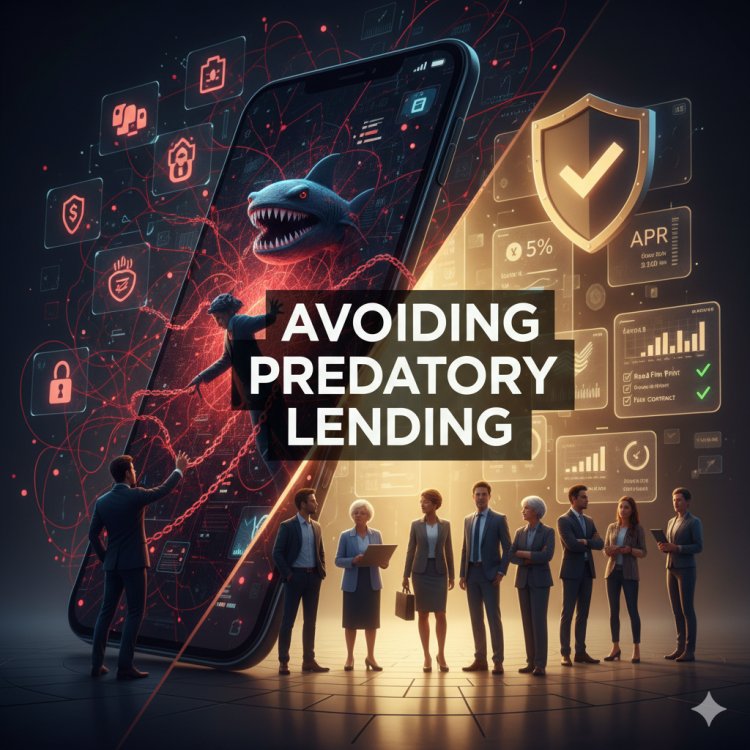
In the rapidly evolving financial landscape of 2026, the ease of accessing credit has reached unprecedented levels. While this digital revolution has empowered millions by providing quick capital, it has also opened the door to a more sophisticated breed of predatory lenders. These entities—ranging from unregulated mobile apps to unscrupulous traditional brick-and-mortar shops—thrive on the desperation and lack of information of their borrowers.
Predatory lending is essentially any lending practice that uses deceptive, unfair, or abusive terms to convince a borrower to accept a loan that they do not need, cannot afford, or that carries astronomical costs. As global economies shift toward AI-driven credit scoring and instant disbursements, the tactics used to "trap" borrowers have become subtler. This guide is designed for a global audience—professionals, students, and retirees alike—to provide the essential knowledge needed to identify, avoid, and escape the clutches of predatory credit.
Part 1: Defining Predatory Lending in the Modern Era
Predatory lending is not always as obvious as a high-interest "loan shark" in a dark alley. In 2026, it often looks like a sleek, user-friendly mobile application or a professional-looking mailer promising "Guaranteed Approval."
The core of predatory lending lies in the asymmetry of information. The lender knows the loan is structured to fail the borrower, while the borrower is often blinded by an immediate need for cash. These loans are designed not for the borrower to succeed and repay, but for the borrower to stay in a perpetual cycle of interest payments, fees, and refinances.
The Targeted Demographics
While anyone can fall victim, predatory lenders strategically target:
-
Low-income households with limited savings.
-
Individuals with poor credit scores who are excluded from mainstream banking.
-
The Elderly, who may be targeted through home equity scams.
-
Small business owners in urgent need of "bridge" financing.
-
Digital-native youth, who may be more susceptible to aggressive social media marketing for "buy now, pay later" or micro-loan apps.
Part 2: The Red Flags: What to Watch Out For
Recognizing the warning signs is your first line of defense. If a loan offer exhibits any of the following characteristics, proceed with extreme caution or, better yet, walk away.
1. Lack of APR Disclosure
The Annual Percentage Rate (APR) is the most critical number in any loan agreement. It represents the true annual cost of borrowing, including interest and all mandatory fees. Predatory lenders often highlight a "daily interest rate" (e.g., 1% per day) or a "monthly fee" to make the loan seem cheap. However, a 1% daily rate translates to a staggering 365% APR. If a lender refuses to clearly state the APR upfront, they are hiding the true cost of the debt.
2. "Guaranteed" Approval and No Credit Checks
Legitimate lenders care about your ability to repay. They perform "due diligence" by checking your credit history, income, and existing debt levels. A lender that promises "Guaranteed Approval" regardless of your financial situation is likely not interested in your repayment; they are interested in the collateral you provide or the high fees they can extract before you default.
3. Loan Flipping
This is the practice of encouraging a borrower to refinance an existing loan into a new one. While refinancing can be a smart move to get a lower interest rate, predatory lenders use it to stack fees. Each "flip" generates new origination fees and service charges, often increasing the principal balance without giving the borrower any additional "real" cash.
4. Excessive "Junk" Fees
Watch out for a long list of fees with vague names, such as "administrative processing," "document preparation fees," or "underwriting premiums." In a standard loan, fees should generally not exceed 3% to 5% of the total loan amount. If the fees are tacked onto the principal, you end up paying interest on the fees themselves.
5. Balloon Payments and Negative Amortization
Some loans are structured with very low monthly payments that don't even cover the interest due. This is called negative amortization, where your debt actually grows every month despite making payments. Other loans end with a massive "balloon payment"—a lump sum due at the end of the term. If you cannot pay this sum, the lender forces you to refinance (loan flipping) or seizes your assets.
6. Asset-Based Lending
If a lender is more interested in your car (Logbook Loans) or your home (Home Equity Loans) than your monthly income, they are practicing asset-based lending. Their goal is often to "strip" the equity from your asset. If you miss a payment, they quickly move to seize the collateral, which is often worth far more than the loan itself.
Part 3: The Digital Trap: Rogue Apps and Data Privacy
In the 2026 digital economy, predatory lending has moved onto our smartphones. "Rogue" lending apps use technology to bypass traditional consumer protections.
Debt Shaming and Privacy Violations
Many predatory apps require access to your contact list, gallery, and location as a condition of the loan. If you default, they use this data for "debt shaming"—sending messages to your family, friends, and employers or posting your debt status on social media. This is an illegal and coercive recovery tactic designed to embarrass you into paying, regardless of the legality of the debt.
The Cycle of "App-Hopping"
Digital lenders often provide very short repayment terms (7 to 14 days). When a borrower cannot pay, they are often pushed toward another app to "cover" the first loan. This leads to a multi-app debt spiral that is nearly impossible to break without external intervention.
Part 4: How to Protect Yourself and Borrow Smartly
Protecting yourself requires a combination of proactive research and a firm understanding of your rights.
1. Research the Lender’s License
Every country has a regulatory body for financial services (e.g., the Central Bank, the CFPB in the US, or the FCA in the UK). Before signing anything, verify that the lender is licensed to operate in your jurisdiction. Licensed lenders are bound by consumer protection laws that limit interest rates and prohibit abusive collection practices.
2. Read the "Fine Print" Carefully
Never sign a document with blank spaces. Ensure that every promise made verbally is written in the contract. Specifically, look for:
-
Prepayment Penalties: Some lenders charge you a fee for paying off your loan early. This is a tactic to keep you trapped in interest payments.
-
Default Clauses: Understand exactly what happens if you are a day late.
3. Use the "Total Cost of Credit" Formula
Instead of looking at the monthly payment, calculate the total amount you will pay over the life of the loan.
Formula: (Monthly Payment $\times$ Number of Months) $+$ Upfront Fees $=$ Total Cost.
Compare this total to the amount you are actually receiving. If the cost is more than 50% of the principal for a short-term loan, it is likely predatory.
4. Maintain Your Credit Score
A high credit score is your best shield against predatory lenders. When you have good credit, you have the "power of choice." You can access prime rates from reputable banks and Saccos, making you an unattractive target for predatory entities.
Part 5: What to Do If You Are Already Trapped
If you find yourself in a predatory loan, do not panic. There are legal and professional avenues to help you regain control.
-
Cease Contact with Unlicensed Lenders: If an unregulated lender is harassing you or your contacts, report them to the authorities immediately. Do not be intimidated by threats of "arrest," as debt is a civil matter in most jurisdictions, not a criminal one.
-
Seek Credit Counseling: Non-profit credit counselors can help you build a debt management plan and negotiate with legitimate lenders to lower your interest rates.
-
Legal Aid: If a lender is trying to seize your home or car through unfair means, consult a legal aid organization. Many predatory contracts contain "unconscionable" terms that a court may rule as unenforceable.
-
Consolidation through Reputable Sources: If possible, take a lower-interest loan from a reputable bank or Sacco to pay off high-interest predatory debt. This "cleans" your debt profile and reduces your monthly burden.
Conclusion
Credit is a double-edged sword. When used correctly, it is a catalyst for growth and stability. When used by predatory actors, it becomes a tool for economic enslavement. As we navigate the complex financial world of 2026, staying informed is no longer optional—it is a survival skill. Always remember that a legitimate lender wants you to succeed because your success ensures their repayment. A predatory lender wants you to struggle because your struggle maximizes their profit.
Choose transparency over speed, and verify before you signify.
What's Your Reaction?