The Invisible Driver: How Financial Confidence Unlocks Your Full Potential
Discover how financial confidence shapes your professional trajectory and personal well-being. Learn actionable strategies to master your money mindset and unlock long-term success.

Success is often measured by external metrics: a title on a business card, the number of zeros in a bank account, or the square footage of a home. Yet, underneath these tangible indicators lies a powerful, often overlooked psychological force that determines how we approach opportunities and navigate adversity. That force is financial confidence.
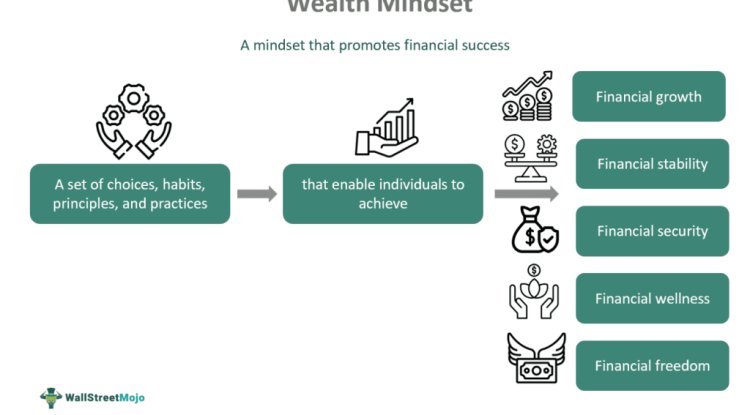
Financial confidence is not simply about being wealthy. It is the belief in your ability to manage your financial life, make informed decisions, and navigate the uncertainties of the economic landscape with clarity rather than fear. It is the steady hand that steers the ship while the market storms rage outside. When financial confidence is high, it creates a psychological "safety zone" that allows individuals to take calculated risks, pursue ambitious goals, and ultimately achieve a higher caliber of success in every area of life.
The Anatomy of Financial Confidence
To understand how financial confidence impacts success, we must first deconstruct what it actually is. It is not an innate trait; it is a learned skill set. It is built upon three foundational pillars:
-
Financial Literacy: The ability to understand basic financial concepts like interest rates, inflation, debt management, and investing.
-
Financial Control: The practical systems you have in place—budgets, savings, and debt reduction plans—that allow you to manage your cash flow.
-
Money Mindset: The emotional and psychological relationship you have with money, which determines your ability to stay calm during market volatility and avoid impulsive decisions.
When these three pillars are strong, you transition from a state of financial survival to a state of financial thriving. This shift changes everything.
The Ripple Effect of Financial Confidence on Career Performance
One of the most immediate impacts of financial confidence is its effect on professional decision-making. When you are constantly worried about how to pay next month’s rent, your cognitive bandwidth is compromised. Psychologists refer to this as the "scarcity mindset."
When you live paycheck to paycheck, your brain becomes hyper-focused on the present. You cannot plan for long-term career growth because you are too busy managing short-term survival. Conversely, when you possess financial confidence, you possess mental clarity. You are not forced to stay in a job you despise simply because you have no savings. You can negotiate for higher compensation because you are not desperate for the offer. You can invest in professional development or take a pivot into a new industry because you have a financial buffer that mitigates the risk.
Financial confidence grants you the freedom to choose, and the freedom to choose is the ultimate competitive advantage.
Risk Tolerance and Innovation
Innovation requires risk. Whether you are an entrepreneur looking to launch a startup or an employee proposing a radical new strategy within a corporation, you are betting on a future outcome that is not guaranteed.
Financial confidence fundamentally alters your risk-reward calculus. If you are financially insecure, your primary objective is risk mitigation—you avoid change to protect what little you have. However, if you are financially confident, you can afford to play the long game. You understand that true wealth is often built through periods of trial, error, and necessary failure.
This is the secret behind many of the world's most successful innovators. They were not necessarily taking "reckless" risks; they were taking "calculated" risks supported by a robust financial foundation. When the fear of ruin is removed from the equation, you are free to explore, experiment, and execute at a higher level.
Financial Confidence and Personal Relationships
Money is one of the leading causes of conflict in personal relationships. Whether between spouses, partners, or family members, financial friction can destroy the strongest of bonds.
Financial confidence acts as a neutralizer in these situations. When both parties (or even just one, who then sets the tone) approach finances with confidence and clarity, money stops being a source of shame or argument and becomes a tool for collective achievement. Open, transparent conversations about financial goals and boundaries reduce anxiety and build trust. When you know where you stand, you can stop fighting about the past and start planning for the future together. This emotional stability, in turn, fuels your personal success. A supportive home life is the bedrock upon which high professional achievement is built.
The Role of Financial Planning as a Success Habit
If financial confidence is the destination, financial planning is the vehicle. Many people avoid planning because they view it as restrictive. They fear that a budget will limit their freedom. This is a fundamental misunderstanding.
A budget is not a restriction; it is an allocation of resources toward your highest priorities. It is a roadmap. When you track your spending and plan your savings, you are practicing discipline. This discipline is transferable. The person who has the self-control to manage their finances is often the same person who has the self-control to manage their time, their health, and their professional commitments.
Breaking the Cycle of Financial Anxiety
Financial anxiety is a silent epidemic. It affects sleep, physical health, and cognitive function. It creates a feedback loop of stress that leads to poor decision-making, which leads to more stress.
Breaking this cycle requires a move toward proactive management. Start by facing the numbers you have been avoiding. The moment you write down your debt, your savings, and your expenses, you strip them of their power to scare you. You turn a vague, looming monster into a concrete problem with a concrete solution. This is the first step toward reclaiming your agency.
How to Cultivate Financial Confidence Today
Building financial confidence is not about waiting for a large windfall. It is about incremental progress. Here are the steps to begin your journey:
-
Automate Your Foundation: Set up automatic transfers to your savings and investment accounts. Removing the decision-making process reduces the chance of impulsive spending and creates consistent growth.
-
Invest in Education: You do not need a degree in finance to manage your money well. Read one book a month on investing, economics, or personal finance. Understanding how money works transforms it from a mystery into a manageable asset.
-
Define Your "Why": Why do you want financial confidence? Is it for the freedom to travel? To support your family? To start a business? Having a clear purpose makes it much easier to stick to your plan when the going gets tough.
-
Seek Mentorship: Find someone whose financial habits you admire and ask them how they built their confidence. Often, you will find that their success was not about luck, but about habits and systems.
The Future of Wealth
As we look toward the future, the definition of success is evolving. We are moving away from purely material success toward a more holistic view that includes time freedom, mental health, and impact. Financial confidence is the bridge to this future. It allows us to step out of the daily grind and consider the legacy we want to leave behind.
It allows us to invest not just in our portfolios, but in our communities, our health, and our personal growth. It changes the conversation from "How do I survive?" to "How do I thrive?"
Conclusion: The Long Game
Financial confidence is not a final destination; it is a practice. It requires constant maintenance, adjustment, and learning. Yet, the rewards are immeasurable. When you secure your financial life, you unlock the ability to pursue your true potential without the anchors of fear and uncertainty.
You become a more effective leader, a more present partner, and a more creative thinker. You stop competing for pennies and start building value. And in that shift, you find not just success, but a sustainable, fulfilling way of living.
The most powerful investment you will ever make is the investment in your own financial confidence. Start today. Audit your habits, define your goals, and begin the work of taking control of your future. Your future self will thank you for the clarity and courage you choose to cultivate right now.
What's Your Reaction?