How Inflation Affects Your Savings & Income: What Everyone Needs to Know to Stay Financially Secure
Inflation quietly reduces your purchasing power, savings value, and income potential. Learn how inflation works, how it impacts your money, and practical ways to protect your finances.
Introduction
Inflation is one of the most powerful yet least understood forces affecting personal finances worldwide. It does not announce itself loudly, nor does it require dramatic economic events to cause damage. Instead, inflation works quietly and consistently, slowly reducing the value of money over time. Whether you are a student saving pocket money, a salaried professional building a career, a business owner managing cash flow, or a retiree relying on savings, inflation influences your financial reality.
At its core, inflation affects how much your money can buy. When prices rise and income does not rise at the same pace, purchasing power declines. Savings lose real value, fixed incomes become strained, and long-term financial goals grow harder to achieve. Understanding inflation is therefore not optional; it is essential for anyone who wants financial stability and long-term security.
This article explores how inflation affects your savings and income, why it matters across all age groups and professions, and what practical steps individuals can take to protect themselves. The goal is not to create fear, but to build awareness and empower informed financial decisions.
Understanding Inflation
What Is Inflation?
Inflation is the general increase in prices of goods and services over time. When inflation occurs, each unit of currency buys fewer goods and services than before. In simple terms, money loses value as prices rise.
Inflation is usually measured using price indices such as the Consumer Price Index (CPI), which tracks the average change in prices for commonly purchased goods and services. A moderate level of inflation is considered normal in growing economies, but high or unpredictable inflation can be harmful.
Why Inflation Happens
Inflation can be caused by several factors, often working together:
-
Increased demand for goods and services without a matching increase in supply
-
Rising production costs, such as wages, raw materials, or energy
-
Expansion of money supply by central banks
-
Supply chain disruptions and global economic shocks
-
Currency depreciation
Understanding these causes helps explain why inflation can vary between countries and across time periods.
How Inflation Affects Your Savings
The Erosion of Purchasing Power
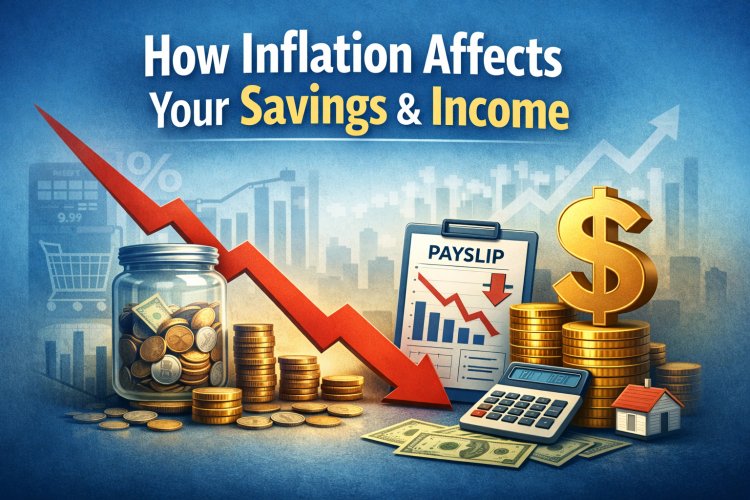
One of the most direct effects of inflation on savings is the loss of purchasing power. Money saved today will not buy the same amount of goods or services in the future if inflation continues.
For example, if inflation averages 5 percent per year, something that costs 100 today will cost approximately 163 in ten years. If your savings do not grow at least at the same rate, their real value declines.
This means that even if the numerical amount in your bank account remains unchanged, its true worth decreases over time.
Low Interest Rates vs Inflation
Many traditional savings accounts offer interest rates that are lower than the inflation rate. When this happens, savers experience negative real returns.
If your savings earn 2 percent interest annually but inflation is 6 percent, you effectively lose 4 percent of purchasing power each year. This silent loss is one of the biggest threats to long-term savers.
Impact on Long-Term Financial Goals
Inflation has serious implications for long-term goals such as education funding, home ownership, retirement, and healthcare planning. Goals that seem affordable today may become significantly more expensive in the future.
Without adjusting savings strategies to account for inflation, individuals may find themselves falling short of their targets despite disciplined saving.
Cash Holdings and Inflation Risk
Holding large amounts of cash exposes individuals to inflation risk. While cash provides liquidity and security, it is one of the most vulnerable assets during inflationary periods.
This does not mean cash should be avoided entirely, but excessive reliance on cash savings can undermine long-term financial health.
How Inflation Affects Your Income
Fixed Income Earners
Individuals earning fixed incomes are often the most affected by inflation. This includes retirees on pensions, salaried workers without regular pay adjustments, and individuals on fixed contracts.
When income remains unchanged while prices rise, purchasing power falls. Over time, this can lead to reduced living standards and increased financial stress.
Wage Growth vs Inflation
Ideally, wages should increase at least at the same pace as inflation. However, wage growth often lags behind rising prices, especially during periods of economic uncertainty.
When inflation outpaces wage growth, workers experience a real income decline, even if their salaries increase nominally.
Self-Employed and Business Owners
For self-employed individuals and business owners, inflation presents both challenges and opportunities. Rising costs of materials, labor, and operations can squeeze profit margins.
However, businesses that can adjust prices or improve efficiency may offset inflationary pressures. The ability to pass costs to customers often determines whether inflation harms or benefits a business.
Variable and Performance-Based Income
Individuals with variable income, such as freelancers or commission-based workers, may experience unpredictable effects from inflation. While some may earn more during inflationary periods, others may face reduced demand for services.
Income volatility combined with rising living costs increases financial uncertainty.
Inflation and Cost of Living
Everyday Expenses
Inflation is most visible in everyday expenses such as food, housing, transportation, healthcare, and education. These costs tend to rise steadily over time, placing pressure on household budgets.
When essential expenses consume a larger share of income, less money remains for savings and investments.
Lifestyle Adjustments
As inflation increases, individuals often need to adjust their lifestyles. This may involve reducing discretionary spending, delaying major purchases, or seeking additional income sources.
While such adjustments can help manage short-term challenges, they may affect quality of life if inflation persists.
Psychological Effects of Inflation
Inflation does not only affect numbers; it affects behavior and mindset. Rising prices can create anxiety, uncertainty, and short-term thinking.
People may become more cautious, reduce spending, or delay long-term plans. Others may overspend due to fear that prices will rise further. Understanding these psychological effects is crucial for maintaining sound financial decisions during inflationary periods.
Protecting Your Savings from Inflation
Investing for Growth
One of the most effective ways to protect savings from inflation is to invest in assets that have the potential to grow faster than inflation over the long term. Historically, assets such as equities and real assets have provided better inflation protection than cash.
While investments involve risk, avoiding growth altogether can be more damaging in the long run.
Diversification
Diversifying across different asset classes helps reduce inflation risk. Different assets respond differently to inflation, and diversification improves financial resilience.
Increasing Financial Literacy
Understanding how inflation works empowers individuals to make better financial decisions. Financial education helps people evaluate options, manage risk, and plan realistically for the future.
Protecting Your Income from Inflation
Skill Development
One of the strongest defenses against inflation is increasing earning potential. Developing in-demand skills improves bargaining power and income growth over time.
Multiple Income Streams
Relying on a single income source increases vulnerability. Multiple income streams provide flexibility and protection when inflation reduces purchasing power.
Negotiating Compensation
Regularly reviewing and negotiating compensation helps ensure income keeps pace with living costs. Awareness of market rates and value contribution strengthens negotiation outcomes.
Inflation Across Different Life Stages
Students and Young Adults
Early awareness of inflation encourages better saving and investing habits. Time is a powerful advantage when building inflation-resistant wealth.
Mid-Career Professionals
This stage often involves balancing income growth, family responsibilities, and long-term planning. Inflation awareness is critical for sustaining progress.
Retirees
Inflation poses one of the greatest risks to retirees. Long-term planning must account for rising healthcare and living costs.
Global Perspective on Inflation
Inflation affects countries differently depending on economic structure, policy decisions, and global events. In an interconnected world, inflation in one region can influence prices elsewhere.
Understanding inflation from a global perspective helps individuals make informed decisions, especially in international careers and investments.
Conclusion
Inflation is an unavoidable part of modern economies, but its impact on savings and income can be managed with awareness and strategy. Left unaddressed, inflation quietly erodes financial progress and undermines long-term security.
By understanding how inflation works, recognizing its effects on savings and income, and adopting proactive financial habits, individuals can protect their purchasing power and build resilience. Financial security is not achieved by avoiding inflation, but by planning intelligently around it.
In a world of changing prices and economic uncertainty, knowledge remains one of the most powerful financial tools available.
What's Your Reaction?