Financial Goal Setting That Works: The Ultimate Guide to Lasting Wealth
Master the art of financial goal setting with our comprehensive guide. Learn proven strategies for budgeting, investing, and achieving long-term wealth for all life stages.

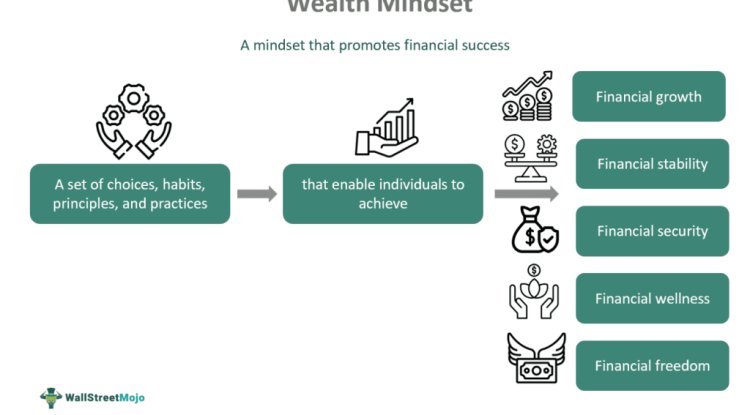
Financial success is rarely the result of a single lucky event or a sudden windfall. Instead, it is the cumulative result of intentional actions, disciplined habits, and, most importantly, a structured framework for setting and achieving goals. Whether you are a student just starting your journey, a mid-career professional looking to optimize your assets, or a retiree seeking to preserve your legacy, the principles of effective financial goal setting remain universal.
The Psychology of Wealth
Before crunching numbers, one must understand the psychological barriers to financial success. Most people fail not because they lack income, but because they lack a "why." Human beings are wired for instant gratification. Evolutionarily, we are programmed to consume resources today rather than save them for an uncertain tomorrow.
To overcome this, your financial goals must be deeply rooted in your personal values. Are you seeking security? Freedom? The ability to provide for your family? When your "why" is clear, the "how" becomes manageable.
The SMART Framework Revisited
You have likely heard of SMART goals, but in a financial context, they require specific nuances:
-
Specific: Instead of saying "I want to be rich," say "I want to have a net worth of $1,000,000."
-
Measurable: Use tools like spreadsheets or apps to track every cent.
-
Achievable: If you earn $50,000 a year, saving $100,000 in one year is mathematically impossible without external factors. Set milestones that stretch you but don't break you.
-
Relevant: Ensure your goals align with your current life stage. A 20-year-old’s goals should look different from a 50-year-old’s.
-
Time-bound: Deadlines create a sense of urgency.
The Three Pillars of Financial Architecture
1. Short-Term Goals (0–2 Years)
These are your immediate safety nets. Without these, long-term plans often crumble at the first sign of trouble.
-
The Emergency Fund: Aim for three to six months of essential living expenses. This is not for "deals" or "investments"; it is for job losses and medical emergencies.
-
Debt Elimination: Focus on high-interest debt, specifically credit cards. The interest rates on consumer debt are often higher than any return you will find in the stock market.
2. Mid-Term Goals (2–10 Years)
This is where lifestyle design happens.
-
Home Ownership: Saving for a down payment requires a balance between liquid savings and low-risk investments.
-
Career Upskilling: Investing in your own earning potential often yields a higher "Return on Investment" (ROI) than the stock market.
-
Major Purchases: Wedding planning, upgrading a vehicle, or starting a small business.
3. Long-Term Goals (10+ Years)
This is where wealth is built through the power of time and compounding.
-
Retirement: Moving from "working for money" to "money working for you."
-
Generational Wealth: Setting up trusts or educational funds for future generations.
Strategic Execution: How to Make It Stick
The Power of Automation Decision fatigue is the enemy of saving. If you have to choose to save money every month, eventually, you will choose to spend it. Automate your transfers. Treat your savings like a bill that must be paid.
The Role of Asset Allocation Your goals dictate your risk. If you need money in two years, it should not be in a volatile stock market. If you need it in twenty years, keeping it in a savings account is a guaranteed way to lose purchasing power to inflation. Understanding the relationship between risk and time is the hallmark of a sophisticated investor.
Regular Audits Life changes. An engagement, a promotion, or a global economic shift requires you to pivot. Review your goals quarterly. Adjust the timelines, but try not to lower the standard.
The Global Perspective
In a globalized economy, financial goal setting must account for currency fluctuations and varying tax jurisdictions. Diversifying your income streams—perhaps through digital entrepreneurship or global index funds—provides a hedge against local economic downturns.
Conclusion
Financial goal setting is not a one-time event; it is a lifestyle. It requires the humility to start small, the discipline to stay the course, and the wisdom to know that true wealth is the ability to live life on your own terms. By applying a structured, values-based approach to your finances, you move from a state of financial anxiety to a state of financial agency.
What's Your Reaction?