How to Price Your Freelance Services
Master the art of freelance pricing. Learn how to calculate your hourly rate, switch to value-based pricing, and negotiate with confidence in this definitive 2026 guide for global professionals.

The Foundation of Freelance Value
Pricing your services is often the most daunting task for any freelancer, whether you are a seasoned software architect or a budding graphic designer. In a global economy where professional boundaries have dissolved, the question is no longer just "What should I charge?" but "How do I communicate my value to a diverse, global market?"
Pricing is not just a number; it is a reflection of your brand, your expertise, and your business sustainability. If you price too low, you risk burnout and the perception of low quality. If you price too high without justification, you may struggle to secure a consistent client base. This guide explores the multifaceted approach to setting rates that respect your time and your talent.
1. The Mathematics of Sustainability
Before looking at what competitors charge, you must look inward at your own financial requirements. Freelancing is a business, and every business must cover its costs and generate a profit.
The Hourly Rate Formula To find your baseline, you must calculate your "Minimum Acceptable Rate" (MAR). This involves summing your annual personal expenses, business overhead (software, hardware, insurance, marketing), and your desired profit margin. Remember that as a freelancer, you are responsible for your own taxes and retirement contributions.
A common mistake is dividing your desired salary by 2,080 (the standard number of work hours in a year). However, as a freelancer, you will spend significant time on non-billable tasks like administration, marketing, and professional development. A more realistic estimate is 1,000 to 1,200 billable hours per year.
Accounting for Global Variables When serving a global audience, you must consider purchasing power parity. A rate that is premium in one region might be entry-level in another. Your pricing strategy should remain consistent with the value you provide, but you must be aware of how currency fluctuations and local economic conditions affect your clients’ budgets.
2. Choosing Your Pricing Model
There is no "one size fits all" model for freelancing. The best approach often depends on your industry and the specific nature of the project.
Hourly Pricing
-
Pros: Simple to track; ensures you are paid for all time spent on "scope creep."
-
Cons: Punishes efficiency. As you get faster and better at your job, you earn less for the same output.
Project-Based (Flat Fee) Pricing
-
Pros: Clients love predictability; allows you to earn more as you become more efficient.
-
Cons: Requires a very tight "Scope of Work" (SOW). If the project takes longer than expected, your hourly average drops significantly.
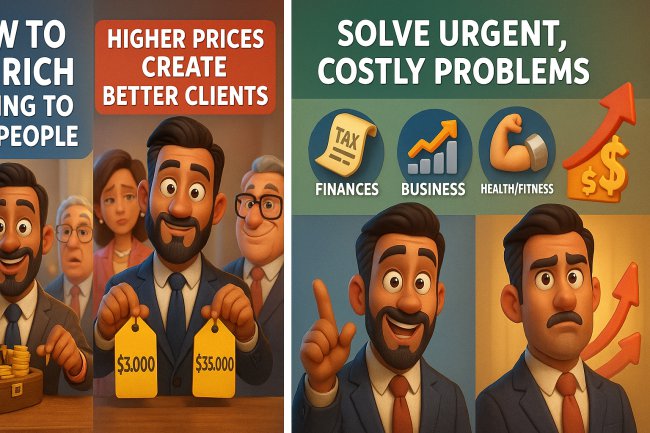
Value-Based Pricing This is the gold standard for high-level professionals. Instead of charging for your time, you charge based on the impact the work has on the client's business. If a marketing campaign generates $100,000 in revenue, a $10,000 fee is a bargain, regardless of whether it took you ten hours or fifty.
3. The Psychology of Pricing
Price is a signal of quality. In the global professional market, "cheap" is often synonymous with "risky."
Price Anchoring When presenting a proposal, offer three tiers of service. This creates an internal comparison for the client. By seeing a "Premium" package, the "Standard" package feels more reasonable, while the "Basic" package ensures you don't lose budget-conscious leads.
The "Expert" Premium Professionals who specialize in a specific niche can command significantly higher rates than generalists. A "Developer" has many competitors; a "FinTech Security Integration Specialist" has very few. Narrowing your focus allows you to price for your unique knowledge rather than your labor.
4. Navigating the Negotiation
Negotiation is not a battle; it is a collaboration to find a mutually beneficial arrangement.
-
Never Lower Price Without Lowering Scope: If a client says your price is too high, do not simply offer a discount. Instead, suggest removing certain deliverables. This protects the integrity of your original quote.
-
Silence is a Tool: After stating your price, stop talking. Let the client process the information. Over-explaining often signals a lack of confidence in your own value.
5. Adjusting Over Time
Your rates should not be static. As you gain testimonials, add new skills to your repertoire, and face rising costs of living, your prices must move upward. It is standard practice to review and increase rates by 5% to 10% annually for existing clients, while new clients should always be quoted at your current market rate.
Conclusion
Pricing your freelance services is a continuous journey of data analysis and self-assurance. By understanding your costs, choosing the right model, and positioning yourself as a value-provider rather than a commodity, you build a resilient career that can withstand the shifts of the global economy.
What's Your Reaction?