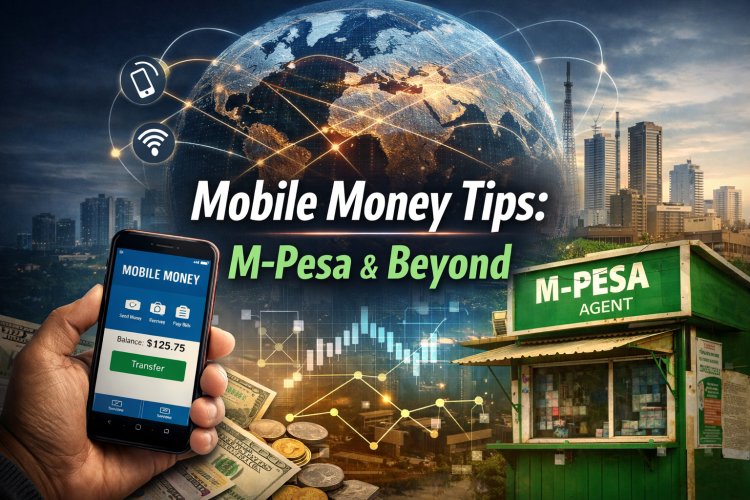
Mobile Money Tips: M-Pesa & Beyond
A comprehensive global guide to using mobile money safely and wisely. Learn practical tips for M-Pesa and other mobile wallets to save, spend, invest, and protect your finances.
Introduction
Mobile money has quietly become one of the most powerful financial tools of the 21st century. From paying a taxi fare to running an entire business, a simple phone can now function as a wallet, bank, and financial assistant. In many parts of the world, especially across Africa, Asia, and parts of Latin America, mobile money has leapfrogged traditional banking systems and brought millions into the formal financial ecosystem.
M-Pesa, launched in Kenya, is often cited as the gold standard of mobile money innovation. But the story does not end there. Today, mobile money includes a wide range of platforms such as Airtel Money, MTN MoMo, Orange Money, Paytm, GCash, Apple Pay, Google Pay, and many others. Each serves different markets, but the principles of smart usage remain largely the same.
This guide is written for a global audience of all ages and professions. Whether you are a student, entrepreneur, employee, freelancer, or retiree, understanding how to use mobile money wisely can improve your financial stability, save time, reduce risk, and open doors to new opportunities.
Understanding Mobile Money
Mobile money refers to electronic financial services that allow users to store, send, receive, and spend money using a mobile phone. Unlike traditional banking, mobile money does not always require a bank account. Instead, it is often linked to a mobile number and managed through a secure network operated by telecom companies or fintech providers.
At its core, mobile money works through a system of digital value. You deposit physical cash with an agent or link your wallet to a bank account or card. That value is then stored electronically and can be transferred instantly to other users or merchants.
The simplicity of mobile money is its greatest strength. However, simplicity can also create complacency. Many users treat mobile wallets casually, forgetting that they are powerful financial tools that require discipline, security awareness, and planning.
Why M-Pesa Changed the World
M-Pesa did more than introduce a new payment method. It reshaped how people think about money. By allowing instant peer-to-peer transfers, M-Pesa reduced reliance on cash, improved safety, and made financial transactions accessible to rural and underserved communities.
Small businesses could receive payments without expensive point-of-sale machines. Families could support relatives instantly across long distances. Workers could receive salaries without visiting a bank. Governments and organizations could distribute funds efficiently and transparently.
The success of M-Pesa proved that financial innovation does not always require complex infrastructure. It requires understanding real human needs and meeting them simply and reliably.
Core Mobile Money Tips for Everyday Use
1. Treat Your Mobile Wallet Like a Bank Account
Many people underestimate their mobile wallets because the balances may seem small. However, small amounts add up. Develop the habit of checking your balance regularly, tracking transactions, and keeping records just as you would with a traditional bank account.
Avoid impulsive spending simply because the money feels digital. Digital money is real money.
2. Use Strong Security Practices
Security is non-negotiable. Always protect your mobile money PIN. Avoid using obvious numbers such as birth years or repeated digits. Never share your PIN with anyone, including people claiming to be customer service agents.
Enable additional security features where available, such as biometric authentication or transaction alerts. If your phone is lost or stolen, report it immediately to your service provider.
3. Be Alert to Fraud and Scams
Mobile money fraud is increasingly sophisticated. Common scams include fake promotions, urgent requests claiming to be from relatives, and messages asking you to reverse transactions.
Always verify before sending money. Legitimate companies will never ask for your PIN. If something feels rushed or threatening, pause and confirm.
Smart Saving Using Mobile Money
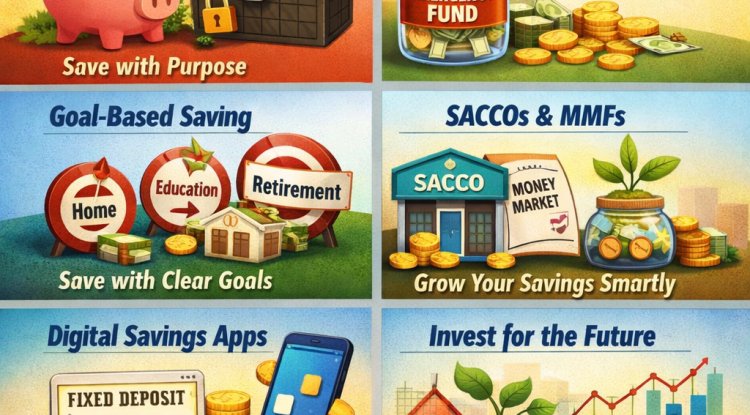
Mobile money platforms are no longer just for transactions. Many now offer savings features, lock accounts, and goal-based wallets.
Start by setting aside small amounts consistently. Even modest daily or weekly savings can grow significantly over time. Use automated savings options where available to reduce the temptation to spend.
Some platforms partner with banks or investment firms to offer interest-bearing savings. Understand the terms, withdrawal conditions, and risks before committing funds.
Budgeting with Mobile Money
Mobile money can be a powerful budgeting tool if used intentionally. Categorize your spending by purpose such as transport, food, utilities, and entertainment. Many apps provide transaction histories that make this easier.
Review your spending patterns monthly. Identify leaks where small, frequent transactions accumulate into large expenses. Adjust accordingly.
For professionals and freelancers, separating personal and business mobile wallets can significantly improve financial clarity.
Mobile Money for Businesses and Professionals
Entrepreneurs and professionals increasingly rely on mobile money for operations. It enables quick payments, reduces cash handling risks, and improves record-keeping.
Use official merchant accounts where available. These often provide better reporting tools, higher transaction limits, and increased credibility with customers.
Reconcile your mobile money statements regularly. Accurate records simplify tax compliance, financial planning, and business growth decisions.
Paying Bills and Managing Obligations
One of the most practical uses of mobile money is bill payment. Utilities, school fees, insurance premiums, and subscriptions can often be paid directly from your phone.
Automating recurring payments helps avoid late fees and service disruptions. Always double-check paybill or merchant numbers before confirming transactions to avoid costly mistakes.
Mobile Money and Credit Services
Many platforms now offer short-term loans and overdraft services. While convenient, these should be used cautiously. Interest rates and fees can be high, especially for frequent borrowing.
Borrow only when necessary and for productive purposes. Avoid using mobile loans to finance lifestyle expenses unless you have a clear repayment plan.
Your repayment behavior often affects your digital credit score, which may influence future access to financial services.
Investing Through Mobile Platforms
Mobile money is increasingly connected to investment opportunities such as government bonds, mutual funds, and micro-investment products.
Before investing, understand the product, risk level, and liquidity. Start small and diversify where possible. Avoid promises of guaranteed high returns, as these are often red flags.
Investment is a long-term process. Use mobile platforms as tools, not shortcuts.
Cross-Border Transfers and Remittances
Mobile money has simplified international remittances, reducing costs and transfer times. This is especially important for families and professionals working across borders.
Compare fees, exchange rates, and transfer limits when sending or receiving money internationally. Transparency matters, as small differences can significantly impact the final amount received.
Mobile Money and Financial Inclusion
One of the greatest contributions of mobile money is financial inclusion. It provides access to financial services for people traditionally excluded from banking systems.
This inclusion empowers individuals to save securely, manage risks, invest in education or businesses, and participate more fully in the economy.
However, inclusion must be matched with education. Financial literacy ensures that access translates into long-term empowerment rather than debt or exploitation.
Teaching the Next Generation
Young people are growing up in a digital financial world. Teaching responsible mobile money habits early can shape healthier financial behaviors.
Parents and educators should emphasize concepts such as budgeting, saving, and security. Practical guidance is more effective than fear-based warnings.
The Future of Mobile Money
Mobile money continues to evolve. Integration with global payment systems, digital identity, and artificial intelligence is expanding its capabilities.
As systems become more sophisticated, users must remain informed and adaptable. Continuous learning is essential in a rapidly changing financial landscape.
Conclusion
Mobile money, led by platforms like M-Pesa, has transformed how the world interacts with finance. It has made transactions faster, safer, and more accessible, while opening doors to saving, investing, and entrepreneurship.
Yet, technology alone is not enough. Smart habits, financial literacy, and disciplined decision-making are what turn mobile money from a convenience into a wealth-building tool.
By applying the tips outlined in this guide, users across all ages, genders, and professions can navigate mobile money with confidence and purpose, ensuring that digital convenience translates into real financial progress.
What's Your Reaction?