Understanding Bank Accounts: Checking vs Savings
Understanding bank accounts is essential for smart money management. This comprehensive guide explains the differences between checking and savings accounts, their benefits, features, and how to choose the right one for your financial goals.
Introduction
Bank accounts are among the most basic yet most important financial tools available to individuals across the world. Whether you are a student receiving your first allowance, a professional managing a salary, an entrepreneur handling business income, or a retiree safeguarding savings, understanding how bank accounts work is essential. Despite their widespread use, many people still do not fully understand the difference between checking and savings accounts, often using them interchangeably without a clear strategy.
Understanding bank accounts is not just about knowing where your money is stored. It is about learning how to manage cash flow, build savings, avoid unnecessary fees, and create a solid financial foundation. This article provides a comprehensive explanation of checking and savings accounts, their purposes, benefits, limitations, and how to use them effectively to support your financial goals.
What Is a Bank Account
A bank account is a financial account maintained by a bank or financial institution that allows individuals to deposit, withdraw, and manage money securely. Bank accounts offer safety, convenience, and access to various financial services that would otherwise be difficult or risky to manage using cash alone.
Modern bank accounts also provide digital access through mobile apps, online banking platforms, debit cards, and automated payment systems. These tools allow people to pay bills, receive income, transfer funds, and track spending efficiently.
Among the various types of bank accounts available, checking and savings accounts are the most common and serve distinct but complementary purposes.
Understanding Checking Accounts
A checking account is designed for everyday financial transactions. It acts as the central hub for daily money management, allowing frequent deposits and withdrawals with minimal restrictions.
Purpose of a Checking Account
The primary purpose of a checking account is convenience. It is intended for regular use, including receiving salaries, paying bills, purchasing goods and services, and transferring money to others. Checking accounts are ideal for managing cash flow rather than storing money long-term.
Key Features of a Checking Account
Checking accounts typically offer unlimited or high-frequency transactions. Users can access their funds through debit cards, checks, online transfers, and ATM withdrawals. Many checking accounts also support automatic payments for utilities, subscriptions, rent, and loan repayments.
Another defining feature of checking accounts is their liquidity. Money stored in a checking account is readily available at any time, making it suitable for daily expenses and unexpected needs.
Interest and Fees
Most checking accounts offer little to no interest on deposited funds. This is because they are not intended for saving or growing money but rather for facilitating transactions.
Some checking accounts may charge monthly maintenance fees, ATM fees, or overdraft fees. However, many banks offer fee-free options, especially when certain conditions are met, such as maintaining a minimum balance or receiving regular deposits.
Understanding Savings Accounts
A savings account is designed to help individuals store money for future use while earning interest. Unlike checking accounts, savings accounts encourage limited access to funds to promote saving behavior.
Purpose of a Savings Account
The primary purpose of a savings account is to set money aside for short-term and long-term goals. This may include emergency funds, education expenses, travel plans, home purchases, or retirement savings.
Savings accounts help individuals separate money meant for spending from money meant for saving, reducing the temptation to use funds unnecessarily.
Key Features of a Savings Account
Savings accounts typically limit the number of withdrawals or transfers allowed within a certain period. This restriction helps discourage frequent spending and supports disciplined saving habits.
Funds in a savings account earn interest over time. While interest rates vary depending on the bank and economic conditions, savings accounts generally offer higher interest rates than checking accounts.
Savings accounts also provide security and peace of mind, as money stored is protected and less exposed to impulsive spending.
Interest and Growth
The interest earned on savings accounts allows money to grow gradually. While savings accounts are not designed for high returns, they offer a safe and stable way to preserve value and combat inflation to some extent.
Some banks offer high-yield savings accounts with competitive interest rates, especially through online banking platforms.
Key Differences Between Checking and Savings Accounts
Understanding the differences between checking and savings accounts helps individuals use each account type effectively.
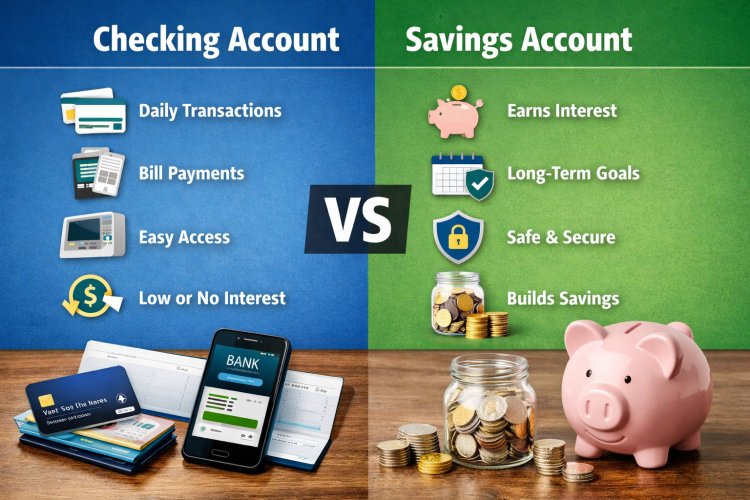
Checking accounts prioritize accessibility and frequent use. Savings accounts prioritize security and growth. Checking accounts are best suited for managing income and expenses, while savings accounts are best for accumulating funds over time.
Checking accounts often come with debit cards and check-writing privileges, while savings accounts may have limited transaction methods. Savings accounts earn interest, whereas checking accounts usually do not.
How Checking and Savings Accounts Work Together
Rather than choosing one over the other, most individuals benefit from using both checking and savings accounts together. This combination allows for efficient money management and financial organization.
Income such as salaries or business earnings is typically deposited into a checking account. From there, a portion of the money can be transferred into a savings account based on financial goals.
This approach helps individuals control spending, build savings consistently, and maintain clarity over their finances.
Choosing the Right Checking Account
When selecting a checking account, it is important to consider factors such as fees, accessibility, and digital features. Individuals should look for accounts with low or no monthly fees, convenient ATM access, and reliable online banking services.
For professionals and entrepreneurs, features such as mobile deposits, transaction alerts, and seamless transfers can significantly improve financial efficiency.
Choosing the Right Savings Account
When selecting a savings account, interest rates and accessibility are key considerations. Higher interest rates allow savings to grow faster, while easy transfer options ensure funds can be accessed when needed.
Individuals should also consider whether the bank offers goal-based savings tools, automated transfers, and strong customer support.
Common Mistakes People Make with Bank Accounts
Many people keep all their money in one account, which often leads to overspending and poor financial tracking. Others leave large amounts of money in checking accounts where it earns no interest.
Another common mistake is ignoring bank fees or failing to understand account terms. Over time, small fees can significantly reduce savings.
Understanding how each account works helps avoid these mistakes and promotes better financial habits.
The Role of Bank Accounts in Financial Literacy
Bank accounts play a foundational role in financial education. Learning how to manage checking and savings accounts teaches essential money skills such as budgeting, planning, discipline, and responsibility.
Financial literacy begins with understanding where money goes, how it grows, and how to protect it. Checking and savings accounts provide the structure needed to develop these skills.
Bank Accounts in the Digital Age
With the rise of digital banking, managing checking and savings accounts has become more convenient than ever. Mobile apps allow users to track spending, automate savings, and receive real-time alerts.
Digital banking has expanded access to financial services globally, enabling people from different backgrounds to participate in the formal financial system.
Conclusion
Understanding bank accounts is a critical step toward financial stability and long-term success. Checking and savings accounts serve different but equally important purposes. When used correctly, they provide structure, security, and clarity in managing money.
A checking account supports daily transactions and cash flow management, while a savings account supports future goals and financial resilience. Together, they form the foundation of smart money management.
By learning the differences, choosing the right accounts, and using them strategically, individuals can improve their financial health and build a stronger financial future.
What's Your Reaction?