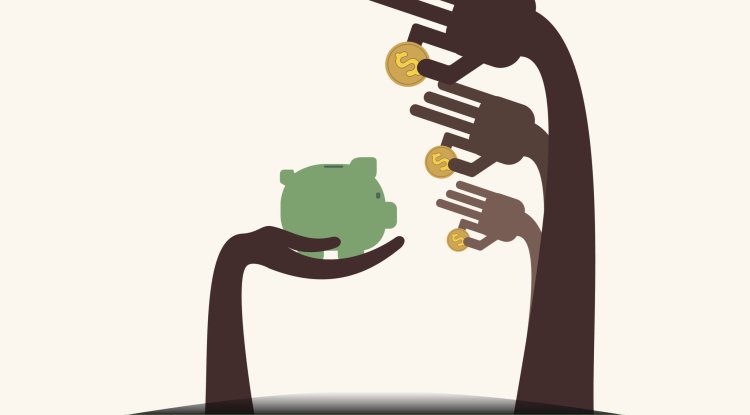
Money Mindset: 10 Core Beliefs That Help or Hurt Your Wealth
Discover how your psychological relationship with money dictates your financial future. Learn to identify limiting beliefs and adopt a growth-oriented money mindset for lasting wealth.

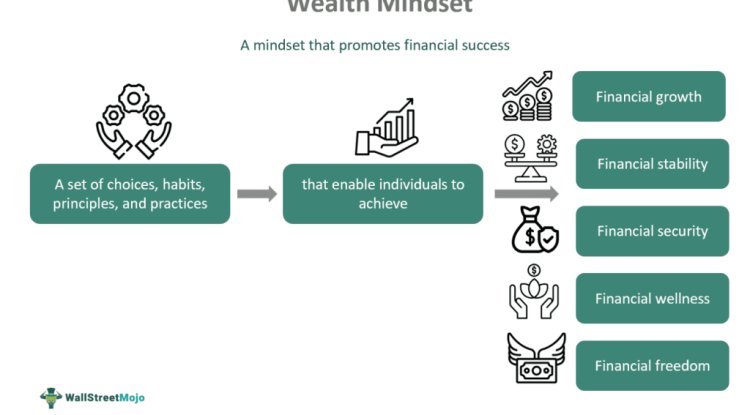
The concept of "money" is rarely just about currency. For most people, money is a symbol of security, power, freedom, or even self-worth. This internal narrative—your Money Mindset—is the invisible scaffolding upon which your entire financial life is built. While a global audience comes from diverse backgrounds, the psychological triggers regarding wealth are surprisingly universal.
Understanding the Internal Blueprint
Every individual carries a "financial blueprint" formed by childhood experiences, cultural norms, and past failures. This blueprint acts like a thermostat; if you believe you are only "worth" a certain amount, your subconscious mind will often find ways to sabotage your success if you exceed that limit. To change your financial reality, you must first recalibrate the thermostat.
The Beliefs That Hurt Your Wealth
1. The Scarcity Trap
A scarcity mindset is the belief that there is a finite amount of wealth in the world. If someone else wins, you must lose. This belief breeds envy and fear. It prevents collaboration and stops you from taking calculated risks because you are too focused on "protecting" the little you have rather than "expanding" your horizons.
2. The "Money is the Root of All Evil" Fallacy
Misquoting this famous phrase leads many to believe that seeking wealth is inherently immoral. If you subconsciously believe that being wealthy makes you a "bad person," you will never allow yourself to become rich. In reality, money is neutral—it is a tool that amplifies who you already are.
3. The Myth of the "Fixed Income"
Many professionals believe their earning potential is capped by their job title or their degree. This limiting belief ignores the digital age's ability to scale skills, create side hustles, or invest in assets. When you believe your income is fixed, you stop looking for opportunities to grow.
4. The Victim Narrative
Blaming the economy, the government, or your upbringing for your financial status is a wealth-killer. While systemic issues exist, a victim mindset relinquishes your power to change your situation. Wealthy individuals focus on what they can control: their skills, their savings rate, and their reactions to market shifts.
The Beliefs That Help Your Wealth
1. The Abundance Mindset
The inverse of scarcity, an abundance mindset assumes that opportunity is everywhere. This leads to a proactive approach to networking and investing. You begin to see money as a renewable resource that can be generated through value creation.
2. Viewing Money as a Tool for Impact
When you shift your perspective from "money for consumption" to "money for contribution," your motivation changes. Wealth becomes a means to provide for your family, support causes you care about, and create jobs. This higher purpose often provides the fuel needed to endure the hardships of wealth building.
3. The Power of Compounding (Patience)
A wealth-helping mindset understands that true riches are built over decades, not days. This involves understanding the mathematical beauty of growth. If we denote the future value of an investment as $FV$, the initial principal as $P$, the interest rate as $r$, and the number of periods as $t$, the formula is:
The mindset shift here is focusing on $t$ (time). Successful investors prioritize consistency over intensity.
4. Continuous Self-Investment
The most valuable asset you will ever own is your own mind. Professionals who believe that "education ends at graduation" often see their wealth stagnate. Those with a growth mindset view every dollar spent on a book, a seminar, or a new skill as an investment with the highest potential Return on Investment (ROI).
Practical Steps to Shift Your Mindset
Transitioning from a "hurtful" to a "helpful" mindset requires intentional practice.
-
Audit Your Circle: You are the average of the five people you spend the most time with. If your circle constantly complains about lack, you will too. Seek out mentors and peers who discuss ideas and investments rather than people and problems.
-
Practice Financial Mindfulness: Track every cent that enters and leaves your life. Ignorance is not bliss in finance; it is a symptom of a fearful mindset. Face your numbers with courage.
-
Reframe "Expenses" as "Investments": Instead of thinking, "I am losing money on this course," think, "I am buying a skill that will pay me for the rest of my life."
Conclusion
Your bank account is a lagging indicator of your habits, and your habits are a direct result of your beliefs. By identifying the toxic narratives you’ve inherited and replacing them with principles of abundance, patience, and personal responsibility, you align yourself with the mechanics of wealth creation. Wealth is not a matter of luck; it is a matter of psychology.
What's Your Reaction?