10 Best Savings Challenges to Grow Your Money This Year: The Ultimate Guide to Financial Freedom
Transform your finances with the most effective savings challenges of the year. From the 52-week challenge to the No-Spend Month, learn how to build wealth and discipline.
The Philosophy of the Savings Challenge
In a global economy characterized by fluctuating markets and rising costs of living, the ability to save money has moved beyond a simple habit—it is now a survival skill. However, for many professionals and families, the act of saving feels like a chore or a form of deprivation. This is where the savings challenge comes into play. By gamifying the process of wealth accumulation, individuals can bypass the psychological barriers of "scarcity" and instead focus on the "achievement" of reaching milestones.
A savings challenge is not merely about the final dollar amount; it is about the rewiring of your brain. It transforms the way you perceive every dollar that passes through your hands. Whether you are a student in Mumbai, a tech professional in San Francisco, or a retiree in London, these challenges provide a structured framework to ensure that your financial future is not left to chance.
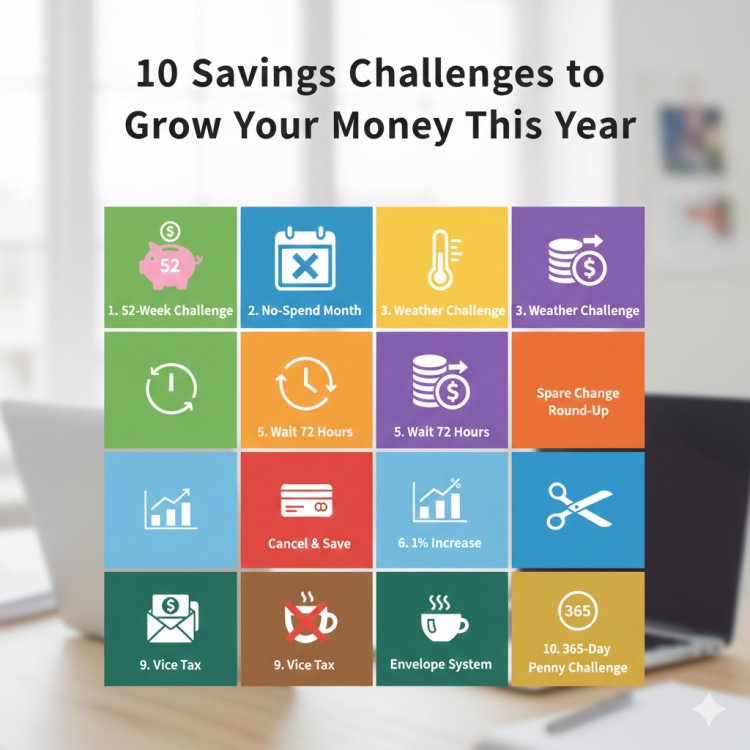
1. The 52-Week Savings Challenge
The 52-Week Challenge is perhaps the most famous financial game globally. Its brilliance lies in its progressive nature. In week one, you save 1 unit of your local currency (Dollar, Euro, Pound, Yen, etc.). In week two, you save 2 units. By the time you reach week 52, you are saving 52 units.
Why it works: It builds momentum. The initial weeks are so easy that you barely notice the impact on your lifestyle. As the amounts increase, your "saving muscle" has already been strengthened, making the larger amounts at the end of the year feel achievable. For those using the US Dollar, this results in a total of 1,378 Dollars by the end of the year.
2. The No-Spend Month (Fiscal Fasting)
A "No-Spend Month" involves freezing all non-essential spending for 30 days. You pay for your rent, utilities, basic groceries, and insurance, but everything else—dining out, new clothes, subscription services, and impulse buys—is strictly forbidden.
The Professional Impact: This challenge acts as a financial detox. It forces you to identify the "leaks" in your budget. Most professionals are surprised to find that they spend hundreds of units per month on convenience items that do not actually improve their quality of life. This challenge is particularly effective for those looking to jump-start an emergency fund.
3. The Weather Savings Challenge
For a more unpredictable and fun approach, some savers align their deposits with the weather. Every Wednesday, you check the high temperature for your city and transfer that amount into your savings account.
Global Adaptability: If you live in a tropical climate with high temperatures, your savings will skyrocket. If you live in a colder climate, you might choose to save the difference between the temperature and a base number (like 100). This keeps you engaged with your finances on a weekly basis, preventing the "out of sight, out of mind" mentality.
4. The Spare Change (Digital Round-Up) Challenge
In the modern era, physical coins are becoming rare. However, digital "spare change" is a massive untapped resource. Many modern banking apps offer a "round-up" feature. If you buy a coffee for 3.50, the app rounds it up to 4.00 and puts the 0.50 into a separate savings account.
The Power of Small Wins: This challenge is effortless and invisible. For a busy professional, it provides a way to save without having to actively manage transfers. Over the course of a year, these micro-deposits can accumulate into a significant sum, often enough to cover a vacation or a major appliance repair.
5. The "Wait 72 Hours" Challenge
While not a traditional deposit challenge, this is a behavioral challenge. For any non-essential purchase over a certain threshold (e.g., 50 units), you must wait exactly 72 hours before hitting the "buy" button.
Psychological Resilience: This interrupts the dopamine loop associated with online shopping. Often, after three days, the initial impulse has faded, and you realize you didn't actually need the item. The money you would have spent is then immediately moved into your high-yield savings account.
6. The 1% Increase Challenge
This challenge is designed specifically for career professionals. Every three months, you increase your savings rate by exactly 1% of your gross income. If you are currently saving 5%, you move to 6%. In three months, you move to 7%.
Long-Term Wealth Building: Because the increase is so small, your lifestyle adapts almost instantly. However, the cumulative effect of a 4% increase in your annual savings rate over a year can shave years off your retirement timeline due to the power of compound interest.
7. The "Cancel and Save" Challenge
In the subscription economy, we are often paying for services we no longer use. This challenge requires you to audit every single recurring payment on your credit card statement. For every subscription you cancel, you must set up an automatic transfer for that exact amount into a "Wealth Account."
Reframing Expense as Capital: Instead of seeing that 15-unit streaming service as a "lost" expense, you see it as 15 units of capital that is now working for you, earning interest rather than being paid to a corporation.
8. The Envelope System (Cash Only)
For those who struggle with digital overspending, returning to physical cash can be transformative. Allocate a specific amount of cash for categories like "Dining" or "Entertainment" into envelopes. Once the envelope is empty, you cannot spend any more in that category for the month.
Tangible Awareness: Research shows that the brain feels more "pain" when handing over physical bills than when tapping a card. Any cash left in the envelopes at the end of the month is your "bonus" to be put into long-term investments.
9. The "Vice" Tax Challenge
If you have a habit you are trying to moderate—such as buying expensive lattes, smoking, or excessive gaming—you "tax" yourself. For every dollar you spend on your vice, you must match it with a dollar into your savings account.
Dual Benefit: This either discourages the unhealthy habit by making it twice as expensive, or it ensures that your future self is being compensated for your current self's indulgences.
10. The 365-Day Penny Challenge
On day one, you save 0.01. On day two, 0.02. On day 365, you save 3.65. This is the ultimate test of consistency. While the amounts are small, the daily habit of interacting with your bank account is the most valuable outcome.
The Role of Technology and Automation
To succeed in these challenges, you should utilize High-Yield Savings Accounts (HYSAs). In the current economic climate, keeping your savings in a standard checking account means you are losing purchasing power to inflation. Look for accounts that offer competitive annual percentage yields (APYs).
Furthermore, automation is the "secret sauce" of the wealthy. If a challenge can be automated through your banking app, do it. This removes "decision fatigue" and ensures that you remain consistent even during stressful weeks at work.
Conclusion: Starting Your Journey
The best savings challenge is not the one that saves the most money on paper, but the one that you can actually finish. Start with a challenge that feels "too easy" to build your confidence. As you see your balance grow, you will find the motivation to take on more aggressive financial goals.
Wealth is not built through a single lucky event; it is built through the disciplined accumulation of small advantages. By choosing one of these challenges today, you are taking an active role in your financial destiny.
What's Your Reaction?